Industrial fume extraction systems are essential components of modern industrial ventilation and air quality management. They are designed to capture and remove airborne contaminants generated during manufacturing, welding, metal processing, chemical handling, and other industrial activities. These contaminants may include smoke, fine particles, metal fumes, vapors, and other substances that can affect workplace air quality. By capturing contaminants close to their source, an industrial fume extraction system helps reduce their movement throughout a facility and supports a cleaner working environment.
As manufacturing processes become more advanced, industrial facilities require effective methods for managing airborne pollutants. Fume extraction technology combines ventilation equipment, ductwork, filtration units, and air movement systems to control contaminants before they spread into surrounding work areas. Understanding the design, filtration methods, and applications of these systems helps facility managers, engineers, and workplace safety professionals make informed decisions about industrial air quality.
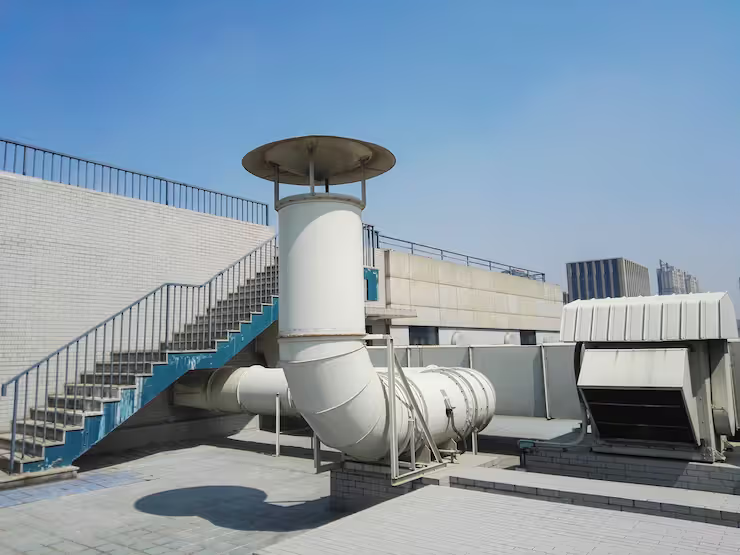
Importance of Industrial Fume Extraction Systems
Workplace Air Quality and Occupational Safety
Maintaining suitable indoor air quality is an important consideration in industrial environments. Welding fumes, chemical vapors, and airborne metal particles may present occupational health risks depending on their composition, concentration, and exposure duration. Effective industrial ventilation can help control these contaminants and reduce unnecessary exposure among workers.
Local exhaust ventilation is commonly used to capture pollutants near their source before they disperse into the workplace. However, extraction equipment must be designed for the specific contaminant and process. General ventilation alone may not provide sufficient control for concentrated fumes or hazardous substances. Appropriate equipment selection, regular inspection, and exposure monitoring are important elements of an effective workplace air quality program.
Environmental and Industrial Process Considerations
Industrial fume extraction systems also support environmental management by collecting airborne pollutants before they are released into surrounding areas. Depending on the process and applicable regulations, collected contaminants may require treatment, controlled disposal, or additional emission-control measures.
In manufacturing facilities, effective extraction can also improve visibility around workstations and reduce the accumulation of residues on nearby equipment. These benefits depend on the type of contaminant, the effectiveness of the extraction design, and the maintenance of the filtration equipment.
Key Components of an Industrial Fume Extraction System
Fume Capture Hood
The capture hood is the part of the system that collects contaminated air near its source. Hood designs vary according to the industrial operation, workstation layout, and direction in which fumes are generated. Common examples include welding extraction arms, enclosure hoods, canopy hoods, and backdraft tables.
Positioning is particularly important because capture effectiveness generally decreases as the distance between the contaminant source and the extraction opening increases. Engineers consider the direction of the fume plume, worker movement, and surrounding airflow when selecting and positioning a hood.
Industrial Ductwork
Ductwork transports contaminated air from the capture point to the filtration or treatment equipment. Its design affects airflow distribution, pressure losses, and overall system performance. Duct diameter, length, bends, branch connections, and internal resistance must be considered during system planning.
Poorly designed ductwork can reduce extraction performance and allow contaminants to escape into the workplace. Industrial ventilation design therefore involves calculating airflow requirements and selecting suitable duct materials for the temperature, chemical properties, and particle characteristics of the extracted air.
Extraction Fan and Airflow Control
An industrial extraction fan creates the pressure difference required to move air through the hood, ductwork, and filtration equipment. Fan selection depends on the required airflow, total system resistance, operating conditions, and characteristics of the contaminants.
Variable-frequency drives and airflow control devices may be used to adjust system performance when production requirements change. Proper airflow balancing helps ensure that extraction points receive the intended air volume without unnecessarily increasing energy consumption.
Filtration and Collection Unit
The filtration unit separates contaminants from the extracted air. Depending on the application, it may contain mechanical filters, cartridge filters, high-efficiency particulate air filters, activated carbon media, or specialized treatment equipment.
The appropriate filtration arrangement depends on whether the contaminants are solid particles, liquid aerosols, gases, or vapors. Some systems require several treatment stages because a single filter type cannot effectively remove every contaminant.
Types of Industrial Fume Extraction Systems
Welding Fume Extraction Systems
Welding fume extraction systems are designed to collect airborne particles and gases generated during welding operations. They may use movable extraction arms, integrated welding torches, downdraft tables, or centralized extraction networks.
The most suitable arrangement depends on the welding process, workpiece size, production volume, and movement of the operator. Capturing fumes close to the welding arc is generally more effective than relying exclusively on room ventilation. Filtration requirements must also account for the metals, coatings, and consumables involved in the process.
Portable Fume Extractors
Portable fume extractors are compact systems designed for localized extraction or work areas where permanent ductwork is impractical. They are commonly used in maintenance workshops, small manufacturing units, laboratories, and certain electronics production environments.
These systems may include an extraction arm, fan, prefilter, and final filtration stage. Their suitability depends on the required airflow, contaminant characteristics, filter capacity, and operating duration. Portable equipment should not be assumed to provide adequate protection for every hazardous substance or industrial process.
Centralized Industrial Extraction Systems
Centralized extraction systems serve multiple workstations through a shared network of hoods, ducts, fans, and filtration equipment. They are often used in large manufacturing plants, fabrication facilities, and industrial workshops.
A centralized arrangement can simplify equipment management and support multiple production areas. However, the system must be carefully balanced so that operating one extraction point does not significantly reduce airflow at another. Engineers also consider future production changes, duct accessibility, and the consequences of filter blockage.
Chemical Fume Extraction Systems
Chemical fume extraction systems manage airborne contaminants generated during chemical processing, mixing, laboratory work, and certain surface-treatment operations. Depending on the substances involved, the system may require corrosion-resistant components, specialized gas treatment, or chemical-compatible filtration media.
The distinction between particles and gases is important. Particle filters do not automatically remove chemical vapors, while activated carbon and other gas-treatment media are suitable only for particular contaminants under appropriate operating conditions. Chemical compatibility, breakthrough monitoring, and safe handling of collected materials must be considered during system design.
Industrial Fume Filtration Technologies
Cartridge and Baghouse Filtration
Cartridge filters are widely used to collect fine particulate matter from industrial air streams. Their pleated construction provides a relatively large filtration area within a compact unit. They are commonly applied in metalworking, welding, and other processes that generate particulate contaminants.
Baghouse systems use fabric filter bags to separate particles from air. They are often selected for applications involving substantial dust loads or larger industrial processes. Filter media must be compatible with the particle size, temperature, moisture level, and chemical characteristics of the extracted air. Filter cleaning mechanisms help manage accumulated material and maintain airflow.
HEPA Filtration
High-efficiency particulate air filtration is used when stringent particle removal is required. HEPA filters can capture very small airborne particles, subject to the applicable filter standard and test conditions. They may be incorporated into specialized manufacturing environments, laboratories, and certain industrial containment systems.
A HEPA filter is not a universal solution for all fumes. It is designed for particulate filtration and does not independently remove most gases or vapors. System design must also account for filter loading, pressure drop, sealing, and safe replacement procedures.
Activated Carbon Filtration
Activated carbon filtration is used to adsorb certain gases and vapors from air streams. The carbon's porous structure provides a large surface area for adsorption, allowing compatible compounds to attach to the media.
Performance depends on the chemical being treated, its concentration, humidity, airflow, and the quantity and condition of the carbon. Activated carbon should therefore be selected based on contaminant-specific requirements rather than treated as a general-purpose solution. Monitoring and replacement procedures are important because exhausted media may allow contaminants to pass through.
Wet Scrubbers and Specialized Gas Treatment
Wet scrubbers use a liquid to capture or absorb selected contaminants from an air stream. They can be appropriate for certain soluble gases, chemical emissions, and particulate applications, depending on the scrubber design and process conditions.
Other specialized technologies may include chemical absorption systems and catalytic treatment equipment. Selection requires an understanding of the contaminants, reaction conditions, by-products, waste streams, and relevant environmental requirements. Some industrial applications need a combination of particulate filtration and gas-treatment stages.
Design Considerations for Industrial Fume Extraction
Contaminant Assessment and Airflow Requirements
The first step in system design is identifying the contaminants generated by the industrial process. Engineers assess the source, physical and chemical properties, temperature, production rate, and potential exposure hazards. Safety data sheets and process information can help establish the characteristics of the materials involved.
The required airflow depends on the capture hood, contaminant release pattern, workstation geometry, and applicable engineering guidance. A system that moves a large volume of air may still perform poorly if the hood is incorrectly positioned or the airflow does not capture the contaminant plume. Source capture and suitable enclosure design are therefore central to effective extraction.
Filter Selection and Pressure Drop
Filter selection should match the type and concentration of the contaminants. Engineers consider filtration efficiency, particle size, operating temperature, chemical compatibility, filter capacity, and the pressure drop across the filtration unit.
As filters accumulate contaminants, airflow resistance can increase. Monitoring differential pressure and airflow helps identify when cleaning, inspection, or filter replacement is needed. The maintenance schedule should follow equipment specifications and the hazards associated with the collected material.
Energy Efficiency and Noise Management
Industrial ventilation equipment can consume substantial energy, particularly when systems operate continuously. Efficient fan selection, well-designed ductwork, appropriate airflow controls, and regular maintenance can help reduce unnecessary energy use.
Noise is another important design consideration. Fans, air movement, vibration, and compressed-air filter-cleaning mechanisms can contribute to workplace noise. Engineers may use vibration isolation, suitable equipment placement, and acoustic treatment where appropriate, while ensuring that noise-control measures do not compromise extraction performance.
Compliance and Risk Assessment
Industrial fume extraction systems should be designed and operated in accordance with applicable occupational health, fire safety, environmental, and machinery requirements. The relevant rules vary by country, industry, and contaminant type.
A workplace risk assessment should identify hazardous substances, possible ignition sources, maintenance hazards, and potential exposure routes. Combustible dust or certain metal particles may require specialized explosion protection and dust-handling measures. Ordinary filtration equipment should not be assumed suitable for explosive or highly reactive contaminants.
Applications of Industrial Fume Extraction Systems
Metal Fabrication and Manufacturing
Metal fabrication facilities generate fumes and particles during welding, cutting, grinding, brazing, and related operations. Extraction systems help capture these contaminants and direct them to suitable filtration equipment.
The system design varies according to the process. Welding may require source-capture arms, while cutting operations may benefit from extraction tables or enclosed work areas. Grinding applications may require equipment designed for the characteristics and quantity of the generated dust.
Automotive and Aerospace Industries
Automotive and aerospace manufacturing involves activities such as welding, surface treatment, composite processing, and specialized assembly. These processes may produce metal fumes, particulate matter, adhesives vapors, or other airborne contaminants.
Extraction requirements depend on the materials and production methods involved. Composite materials and chemical coatings can create different hazards from conventional metalworking, making process-specific filtration and exposure controls important.
Electronics and Electrical Manufacturing
Electronics manufacturing may generate fumes during soldering, circuit-board assembly, and certain thermal processing operations. Localized extraction equipment can collect airborne contaminants near the workstation and direct them through appropriate filtration.
The system must be selected for the substances released by the solder, flux, coatings, and other materials used. Where chemical vapors are present, particle filtration alone may be insufficient. Workstation layout and the positioning of extraction nozzles can significantly influence capture performance.
Chemical Processing and Laboratories
Chemical processing plants and laboratories may require extraction for vapors, aerosols, and gases generated during mixing, heating, sampling, or material transfer. Depending on the risk, suitable controls may include laboratory fume cupboards, enclosed process ventilation, or specialized industrial exhaust systems.
Chemical compatibility and safe exhaust treatment are especially important in these environments. The system must account for the potential toxicity, corrosiveness, flammability, and reactivity of the substances involved.
Maintenance and Performance Monitoring
Routine Inspection
Regular inspection helps identify problems before they significantly affect system performance. Maintenance personnel may examine extraction hoods, flexible arms, duct connections, fan components, seals, and filter housings for damage, leakage, or blockage.
Airflow checks are particularly important because a fan can continue operating even when a blocked duct or overloaded filter prevents adequate contaminant capture. Inspection frequency should reflect operating conditions, manufacturer recommendations, and the risks associated with the process.
Filter Replacement and Safe Waste Handling
Filters must be cleaned or replaced according to their design, operating condition, and manufacturer instructions. A visual inspection alone may not reveal a filter's remaining capacity, particularly when the contaminant is a gas or vapor.
Collected material may contain hazardous metals, chemicals, or combustible particles. Filter changes and waste disposal should therefore follow appropriate handling procedures, personal protective equipment requirements, and applicable waste regulations.
Airflow Testing and System Evaluation
Periodic performance testing can help determine whether the extraction system continues to provide the intended level of control. Evaluations may include airflow measurements, static pressure checks, filter differential pressure, hood performance assessments, and workplace exposure monitoring.
Changes in production equipment, workstation location, duct configuration, or the number of active extraction points can affect performance. Reassessment after significant process changes helps maintain effective contaminant control.
Common Challenges in Industrial Fume Extraction
Industrial facilities may encounter inadequate capture, clogged filters, uneven airflow, excessive noise, or unexpectedly high energy consumption. These problems can arise from unsuitable hood placement, poorly sized ductwork, inappropriate filter media, or insufficient maintenance.
Another common challenge is selecting a filter based only on its advertised efficiency without considering the actual contaminant. Fine particles, chemical vapors, and reactive gases require different control methods. A technically suitable solution begins with contaminant identification and a clear understanding of the industrial process.
Operator training also matters. Workers need to understand the intended position of extraction equipment, indicators of poor performance, and procedures for reporting faults. Even a properly designed system can become less effective when hoods are moved away from the source or airflow openings are obstructed.
Future Developments in Industrial Air Filtration
Industrial air filtration is evolving through improved filter materials, digital monitoring, and more advanced ventilation controls. Sensors can monitor parameters such as differential pressure, airflow, and equipment operating status, helping maintenance teams identify changes that require attention.
Automated controls may adjust fan operation according to production requirements, potentially improving energy management. However, automated adjustments must preserve the airflow and capture performance required for workplace safety.
Developments in connected manufacturing and industrial monitoring are also creating opportunities to integrate extraction equipment with facility management systems. These technologies can support maintenance planning and performance visibility, but they do not replace suitable system design, exposure assessment, or periodic verification.
Frequently Asked Questions About Industrial Fume Extraction Systems
What Is an Industrial Fume Extraction System?
An industrial fume extraction system is equipment designed to capture and remove airborne contaminants generated during manufacturing and other industrial processes. It typically includes a capture hood, ductwork, a fan, and filtration or treatment equipment selected for the specific contaminants.
Which Filter Is Used for Industrial Fume Extraction?
The appropriate filter depends on the contaminant. Cartridge filters and baghouses are commonly used for particulate matter, HEPA filters provide high-efficiency particle filtration, and activated carbon may be used for compatible gases and vapors. Some processes require multiple filtration stages or specialized treatment technology.
How Does Local Exhaust Ventilation Work?
Local exhaust ventilation captures contaminants near the point where they are generated. A hood draws contaminated air into a duct system, which transports it to a suitable filtration or treatment unit. The cleaned air is then handled according to the system design and applicable requirements.
How Often Should Industrial Extraction Filters Be Replaced?
Replacement frequency varies according to the contaminant, operating hours, filter design, and loading conditions. Differential pressure monitoring, airflow testing, manufacturer guidance, and safe maintenance procedures help determine when cleaning or replacement is necessary.
Are Industrial Fume Extraction Systems Suitable for Every Industry?
Different industries can use extraction technology, but the system must match the particular process and contaminant. Welding, chemical processing, electronics manufacturing, and pharmaceutical production may require different capture arrangements, filtration media, and safety controls.
Conclusion
Industrial fume extraction systems play an important role in managing airborne contaminants across manufacturing, metal fabrication, electronics production, chemical processing, and other industrial environments. Their effectiveness depends on appropriate source capture, well-designed ductwork, suitable fans, contaminant-specific filtration, and consistent maintenance.
Understanding the differences between particulate filters, HEPA filtration, activated carbon, and specialized gas-treatment technologies helps industrial professionals evaluate system requirements more accurately. Airflow testing, workplace exposure assessment, operator training, and compliance with relevant safety requirements are also essential for reliable performance. As industrial facilities adopt more advanced monitoring and control technologies, properly designed fume extraction systems will remain an important part of workplace air quality management and responsible industrial operations.